After the Storm: Protecting and Repairing Your Commercial Roof

What to Do with Your Commercial Roof After a Hurricane

When a hurricane sweeps through, your building’s roof often takes the hardest hit. Even if everything looks fine from the ground, unseen damage can compromise the safety and performance of your entire building. Acting quickly—and strategically—after a storm can save thousands of dollars in repairs, protect your investment, and keep business operations moving forward.

Schedule an Inspection Without Delay

Time is critical after a hurricane. The sooner your commercial roof is inspected, the better chance you have of preventing minor issues from spiraling into major problems. Loose flashing, lifted seams, or punctures in the roof system may not be visible from below, but they can allow water to infiltrate and wreak havoc. Having a qualified roofing contractor assess your roof ensures hidden damage is uncovered and documented before it causes long-term trouble.

Know the Warning Signs

While waiting for your roofer, there are signs you can look for that suggest your roof may have damage:

  1. Debris on the ground – Don’t overlook what’s beneath your feet. Pieces of roofing material, insulation, or even broken equipment scattered around the property often mean something has come loose above.
  2. Debris on the roof – Branches, sheet metal, or equipment blown around by high winds.
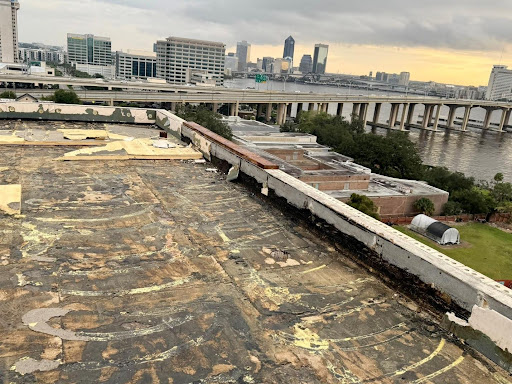
  3. Visible roof damage – Torn membranes, missing components, or compromised details like coping, roof edges, and gutters that are bent, hanging, or swaying in the wind.
  4. Interior water intrusion – Ceiling stains, drips, or damp insulation inside the building.

Even if the leaks seem minor, they may point to larger issues within the roofing system.

Don’t Underestimate Hidden Damage

Hurricanes often leave behind damage that isn’t obvious right away. Moisture can find its way beneath the roof membrane, saturating insulation and causing unseen structural deterioration. Left unchecked, this can result in mold, compromised decking, and even costly interior repairs. What seems like a “small leak” today can escalate into major building damage if ignored.

Repair or Replace?

Not every storm-damaged roof needs to be replaced. In many cases, well-timed repairs can restore performance and extend the life of the system. However, if the damage is extensive—such as widespread membrane failure or significant structural compromise—a replacement may be the most cost-effective long-term solution. A professional inspection and written report will help you weigh your options with confidence.

Protect Insurance and Warranty Coverage

Hurricanes often leave behind damage that isn’t obvious right away. Moisture can find its way beneath the roof membrane, saturating insulation and causing unseen structural deterioration. Left unchecked, this can result in mold, compromised decking, and even costly interior repairs. What seems like a “small leak” today can escalate into major building damage if ignored.

Beware of Storm Chasers and Scams

After every major hurricane, opportunistic “roofing companies” appear overnight—some without licenses, experience, or even a permanent office. Many of them demand payment up front to “get you on the schedule,” then disappear without ever performing the work. Unfortunately, this happens all too often in Florida.

Protect yourself by:

  • Hiring only licensed contractors in the state of Florida (and asking for their license number).
  • Never paying in advance for an inspection, report, or repair schedule. Legitimate roofing contractors bill after work is completed.
  • Working with a trusted roofer you already have a relationship with—such as the contractor managing your preventative maintenance program. That way, you know their reputation, their quality of work, and that they’ll be around long after the storm passes.

It may feel urgent, but taking a moment to verify who you’re hiring can save you from bigger losses down the road.

Temporary Protection Measures

If your roof is actively leaking, temporary measures such as tarping or emergency patching can help minimize interior damage. While these stopgaps buy time, they are not designed to be permanent fixes. Leaving tarps in place for too long can actually make matters worse, so it’s important to move toward permanent repairs quickly.

How Long Will Repairs Take?

The timeline for repairing or replacing a commercial roof after a hurricane varies widely. It depends on the severity of the storm, the size of the roof, and how many other buildings in your area need attention. Roofing contractors typically prioritize emergency situations, but demand for labor and materials often surges after a storm. Acting quickly to get on your contractor’s schedule helps ensure your building isn’t left waiting.

Plan Ahead for the Next Storm

The best way to reduce hurricane-related roof damage is to prepare before the storm ever arrives. Preventative maintenance—including regular inspections, cleaning debris, and reinforcing vulnerable details—greatly improves your roof’s ability to withstand high winds and heavy rain. Enrolling in a preventative maintenance program also means your roof gets the consistent attention it needs to perform at its best when the next storm season rolls around.

Partner With Register Roofing

At Register Roofing, we understand how stressful hurricane recovery can be for building owners. Our team specializes in commercial roof inspections, emergency repairs, and long-term maintenance programs designed to protect your investment. If your building has been impacted by a recent storm—or if you want to strengthen your roof before the next one—contact Register Roofing for a professional assessment. We’ll help ensure your roof is safe, watertight, and ready for the future.
SCREW
SCREW

Experience the Register
Roofing difference

Register Roofing

Request Service